2014年3月15日星期六

Behavioral Economics, Politics and Poker

Economics, politics and poker have a lot in common: leverage, measured aggression, bluffs, traps, fakeouts, big holdings, a lot of hoping and (in some dire situations) praying.
Psychologists have known for some time that these various elements are deeply interwoven, but for the most part, economists and politicians haven't - primarily because they haven't fully grasped the fact that basic psychological principles form a common foundation for all.
So, it was with interest that I saw an article in The New York Times by conservative columnist David Brooks arguing that one reason why we're in this economic mess right now is the failure of economists and politicians to pay attention to simple things that psychologists know.
I thought this was cool and nothing short of remarkable, 'cause journalists just don't go down these kinds of scholarly marked cards paths.
What Brooks did not do (and who can blame him; after all, this was The New York Times) was push the envelope on this analysis and use it to examine poker.
I suspect Brooks doesn't appreciate it, but the list of "Things" he presented ties directly into our game.
So, let's take a look at Brooks' list, examine its connections to poker and, of course, see if we can't learn something that'll give our games a boost upwards.
In what follows, we're the "We" as Pogo, the immortal Sage of the Swamp, put it: "We have met the enemy and they is us."
1. We allow perceptual biases to distort thinking.
If we have been primed for anger, we tend to see people as angrier than they are.
Xenophobes think all foreigners are dangerous. The young fail to recognize wisdom in their elders; the elderly fail to appreciate the insights of the young.
Glen Macdonald
What can I say? Don't judge a book by its cover!
We have decided that the guy on our left is a backwoods hayseed who couldn't spell "poker" if we spotted him the "p-o-k." We think this because he is dressed in a cowboy shirt with fake mother-of-pearl buttons, a hat with dirty thumb smudges on the brim and worn jeans over a pair of shit-kicker boots.
We will, once having formed this image, fail to recognize that a "weak" fold was actually a classy laydown and that this fugitive from a pig farm is actually a pretty solid player.
The next couple of hours will not be pretty.
2. We tend to search for data that confirm our prejudices rather than data that contradict them.
A nonpoker example will help us see this.
I've got a rule for producing numbers. Here's an example that fits my rule: 2,4,6, __. Try to find out trick cards my rule by filling in the blank. I'll give you feedback.
Almost everyone picks 8 here.
I say, "Yup, that's right."
"Ah," you say, "the rule is ascending even numbers."
"Nope," say I.
Then you try 10 as an answer. "Also right," I say.
"OK, the rule is add the last two."
"No, again."
"All right, so let's try 12."
"Yup," I say.
"Aha," you say, "add all the preceding numbers."
"Nope." ...
See the problem? You're trying to confirm your hypothesis. Almost no one tries to disconfirm. (My rule? "Any bigger number," which is really hard to discover unless you try something like 5.)
Dario Minieri
Dario? Overaggressive?
In poker we frequently fall upon this fallacious sword, most often when we continue to play in a manner that is nonoptimal because we tend to find confirmation when it works and fail to appreciate the downside when it doesn't.
Loose, overly aggressive players are the ones most prone to fall into this trap.
3. We overvalue recent events when anticipating future possibilities.
As memories of the past fade, current events stand out in sharp relief. This bias is seen most often in our shifting vision of ourselves based on how we've been running lately.
If we've had a good session or two we see ourselves as solid, professional-level players; a couple of thumpings and our confidence and sense of self take a pummeling.
We have a lamentable tendency to downplay the significance of the historic relative to the contemporary. The best way to counter this is to keep accurate records, which will help keep you from getting derailed by recent developments.
4. We spin concurring facts into a single causal narrative.
Oh, the self-serving myths we manufacture. The tales we tell that mirror our hopes and desires and truth be damned. Poker players vie with golfers and politicians in the use of this one.
Self-referenced narratives are seductive because they are almost always laudatory; few delude themselves into thinking they are bozos when they aren't.
They can also be devastating because of their fragile ties with the real world. We see them used most often by the "contributors" who weave complex tales of their supposed skills in the face of reality.
The trick to preventing this is as simple (and as difficult) as just knowing yourself and accepting who you are.
If you're a basically decent player who just about breaks even, then wrap this mantle about your shoulders and wear it proudly. It actually puts you in a rather select company.
Phil Hellmuth
Phil spends a lot of time applauding his own supposed skill.
5. We applaud our own supposed skill in circumstances where we've actually benefited from dumb luck.
This one comes from what psychologists call the fundamental attribution error. We have an unhappy, but perfectly understandable, tendency to misattribute the causes of the good and bad things that happen to us.
The fundamental attribution error is a general principle. It states that we tend to attribute causes to internal, personal factors rather than recognize the roles of external, contextual and chancy elements in the world about us.
And, of course, it's closely related to #4 above. It's very much a part of the tales we tell ourselves.
Think about your mental state after your last tournament. How much of your success (if you cashed) did you attribute to your brilliance versus good old dumb luck? How much of your failure (if you got sent packing early) did you attribute to lucky draws by "idiots" versus your own ineptitude?
See?

2014年3月13日星期四

Doyle Brunson, Leonardo DiCaprio team up for film

The Texas Dolly is known for being at the forefront of the poker scene, but environmentalism? Not so much.
That all changes now with the launch of the global warming documentary The 11th Hour, a film funded in part by pro poker player Doyle Brunson and Hollywood actor Leonardo DiCaprio.
Released by Warner Bros. and slated for worldwide distribution, the documentary aims to educate the public about the world's current environmental crisis. In the film, narrator DiCaprio gives audiences a bleak look at the consequences of global warming, which is supported by cheat poker testimonials from experts such as physicist Stephen Hawking and 2004 Nobel Peace Prize winner and Kenyan activist Wangari Maathai.
The film's point of view isn't pretty: If we don't change our ways soon, say environmentalists, the earth is in trouble.
"We don't know how things are in your life, but no matter what's going on, this planet has got us beat," said Brunson in a release Friday.
"We've made it sick and it, in turn, is sick and tired of us. We have the floods, fires, droughts, heat waves, melting ice caps, and endangered or extinct species to prove it."
Brunson is one of five executive producers given credit on the film.
The 11th Hour is directed by Nadia Conners and Leila Conners Petersen and includes footage from several natural disasters.
"If sentiment is what the marked poker Oscar-winning film An Inconvenient Truth relied on to get the message out, Nadia and Leila Conners Petersen give the cold hard reality of the situation and don't care whether or not the truth is disturbing," promises the Doyle Brunson Poker Network in a release.
The August premiere of the documentary drew celebrities such as amateur poker player and actor Tobey Maguire, actress Kate Bosworth and Entourage star Adrian Grenier. Since Brunson's involvement in the project, DiCaprio has been photographed sporting a DoylesRoom.com baseball cap out in public.
DiCaprio has long been noted for championing environmental causes.
"Global warming is not only the number one environmental challenge we face today, but one of the most important issues facing all of humanity," he said in an early release about the film. "We all have to do our part to raise awareness about global warming and the problems we as a people face in promoting a sustainable environmental future for our planet."

2014年3月6日星期四

Small Pocket Pairs in Six-Max No-Limit

If you've played six-max cash games with any sort of frequency in the past few years, you'll have noticed that the aggression level has reached epic proportions.
So where in that sea of raises and reraises do small pocket pairs belong?
Pocket pairs are very strong drawing hands. When they hit, they make big pot hands.
Sets are big-money hands so when you flop one, you should be willing to get it in with impunity.
Sets are such large money-winners that at lower stakes there are players known as "set farmers" who do nothing but play juice cards super tight and "farm" sets, doing their best to get all-in when they hit.
This tight, super-basic strategy is even effective enough to beat the smallest stakes ... which should give you an idea of how powerful sets are.

Set Farming Isn't Enough

In today's low- to mid-stakes games you're going to have to do a lot more than set farming to win.
These games are very aggressive. You should be too: aggressive play picks up pots.
Pocket pairs are such big hands and these games are so aggressive that when it's folded to you, you can and should bring in any pocket pair for a raise.
Tom Dwan
Aggressive play picks up pots.
 
Limping in a six-max game is a no-no.
Six-max is about aggression and if you can't raise the hand pre-flop, you most definitely shouldn't be limping it.
Six-Max Games Reward Aggression
In six-max games there are fewer opponents who act behind you than there are in a full-ring game.
This is why you can raise more hands - there are fewer people to wake up with a hand behind you.
Six-max games reward aggression, so if you are first in with a pocket pair, raise it up.
"Dan, your logic doesn't make sense. You tell me to raise my pocket pairs, but they only flop a set 11.8% of the time. What do I do the other 88.2% of the time?"
Well, I say to you, my young padawan, you play poker.
Fire a continuation bet. You still do have a pair; since most hands miss most flops, you will still likely have the best hand.
It is up to you to find out where you stand in the hand by putting your opponent on a range.
If you think you have the best marked cards lenses hand and your opponent will call with worse, bet. If you think your opponent will fold, bet.
Raising with a Wide Range of Hands
The thing about playing the TAG/LAG style is that you will be raising with a wide range of hands before the flop.
You will also be continuation betting on the flop with a slightly narrower range, but still frequently.
When you're betting the flop with both made hands and bluffs, you become a very difficult player to read.
When you are a difficult player to read, your opponents will be more willing to pay you off when you make your hand.
Yes; they will also play back at you when you don't have a hand, but you can then safely fold and it should only lose you a couple of small bets.
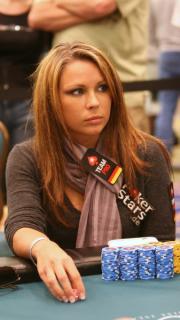
Sandra Naujoks
Raising first with a pocket pair is best.
 
When you hit and they play back at you, you stand to win several big bets - or their whole stack.
This is why pocket pairs are so strong. When they flop, they flop hands strong enough to go to war with stacks over.
This is why raising first in with a pocket pair is your best possible play with it.
You will often win the pot initially with your raise; other times, you'll take the pot down with a continuation bet on the flop; still other times, you'll win when you flop a set.
When you raise with your pocket pair before the flop it gives you the most ways to win.
Playing Pocket Pairs to a Raise
When there is a raise in front of you, you have to play pocket pairs a little bit more gingerly.
Many six-max players three-bet these pocket pairs religiously. I believe this is flawed thinking.
As I discussed in the "don't overuse the light three-bet" article, three-betting a hand like a pocket pair is counterintuitive.
Pocket pairs are too strong to fold. You'd obviously like to continue with the hand, so calling is the best play.
Three-betting will often cause your opponent to fold before the flop, giving you no chance to actually win his stack.
You may win more small pots, but seldom will you stack him. Also, you risk being reraised and forced to fold your three-bet and the equity you have invested in the pot.
Your best bet when playing small pocket pairs against raises is to flat-call and play poker on the flop.
Three-betting them is just fancy-play syndrome and does nothing to increase your overall expectation.
What Happens If I Raise and Get Reraised?
This is a tricky spot.
If you raise before the flop and find yourself reraised, you should fold most of the time - unless your opponent is a compulsive three-bettor or your stacks are very deep.
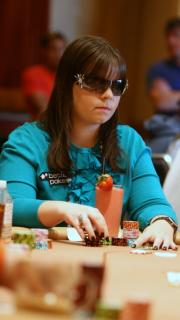
Annette Obrestad
Don't overuse the three-bet.
 
Even if your opponent is a compulsive three-bettor, you should seldom just call. Be aware of your position and your image.
Unless the stacks are deep you are not getting the implied odds to call for set value; if you are out of position it further complicates things.
You will be out of position against a three-bettor on a flop that is often going to miss you.
You are almost always going to be forced into check-folding. Instead, your best bet is just to fold and wait for a better spot.
If you're in position against a three-bettor you should still likely fold.
If your opponent is a serial three-bettor, you may call with the intention of bluffing later or four-bet him as a bluff.
This should be done very seldom, and only versus a player you know you have fold equity against.
The bulk of the value of small pocket pairs comes when you flop a set.
It isn't going to happen all the time, so if you're going to be playing them fast before the flop, you had better have some fold equity as well.

Keep One Thing in Mind

Small pocket pairs are a drawing hand. Always remember that.
You cannot call large three-bets pre-flop if you want to have a positive expectation.
Most of the value in small pocket pairs comes from when they flop a set, which will only happen 11.8% of the time, as mentioned.
The rest of the time you will be left with an all-overcard board, which is why it is better to be the aggressor.
When you are the aggressor, you have significantly more ways to win - you can win pre-flop, on the flop or at showdown with the best hand.
Pocket pairs are big hands when they flop sets, but are also very troublesome for newer players.
Play them strong like you would any other good drawing hand and you'll do fine.

2014年2月27日星期四

More to Poker than Hold'em Part 3: Stud Hi-Lo and Five-Card Triple-Draw Lowball

Part three of a three-part series. Now that you're familiar with Omaha, O8, Stud and Razz, we can move on to Stud Hi-Lo and Five-Card Triple-Draw Lowball.
The final two games I'll be showcasing in this article are the two games least often spread. The first game is one of the hardest games to play, while the second is rare for different reasons.
Stud Eights-or-Better
Also known as Stud EB and Stud Hi-Lo, Stud Eights-or-Better is one of my personal favorite games to play.
The Basics
The game plays the same as Stud. Everyone antes, the low card brings and you get three cards off the deal. The difference in Stud EB is the same as between Omaha and O8, where the qualifying low hand wins half the pot.
As in O8, the low is made up of the lowest five-card hand, all cards being below eight in value, with no pairs. Straights and flushes do not count against you, making the nut low A-2-3-4-5.
Freddy Deeb won the $50,000 buy-in WSOP H.O.R.S.E event in 2007.
Basic Strategy
If you remember in O8, you always wanted to be playing for the high, with a redraw to the low. Stud Hi-Lo is the opposite. You want to play for the low, with a redraw to the high. As I explained in O8, it's easy to get quartered for half the low pot by playing marked cards exclusively low.
In Stud EB, it's much easier to discern if you have the winning low than the high. You use the same technique as you would in Razz, and read the other players' board cards. Also, the low card is forced to bring in Stud. If you're dealt three to a bike, you have the chance to complete, adding money to the pot with well on the way to half the pot.
You have to correctly gauge your own hand, and pit it against your opponents' hands. Who's chasing what? Who's on the high, and who's on the low? Whom can you beat? You want to play the low, and hopefully pick up a high along the way.
The beauty of hitting the wheel is it can be good for both the high and the low if no one can beat the baby straight.
Starting Hands
Starting hands for Stud EB are the same as both Stud and Razz. A monster Stud starting hand can be good for the high, while a monster Razz starting hand is good for the low. The best are hands with the option for scooping, making A 3 2 the best possible Stud EB starting hand.
Five-Card Triple-Draw Lowball
The Basics
Five-Card Triple-Draw Lowball (TDL) is a lot like the poker we played as kids, or see on some old cowboy movies. You start by being dealt five cards, all face down. You have a betting round starting with the person to the left of the big blind.
After the first betting round you get to throw away as many cards as you'd like. After you get new cards to replace the ones you tossed, you have another betting round starting with the player to the left of the button.
You do this until you have thrown away cards three times, or everyone has folded to one player's bet. When all the betting rounds are complete the hands are turned over; the best hand takes the pot. In a game of lowball, the worst hand is the best hand.
Not to be confused with the Lo hand in games such as O8, Razz and Stud EB, TDL is a Lowball game:
  • Aces are high
  • Pairs, straights and flushes count against you
This makes the nut hand in TDL 2-3-4-5-7. For this reason, lowball is commonly called 2-7 Lowball. Hands are still counted from the top down, making the nut hand a 7-5. As in all other poker juice cards games, two identical hands split the pot.
Because of the large amount of cards being dealt every hand, this is most commonly a five-person max game, sometimes being spread with six.
Other than in the big game, I've only ever seen TDL spread at the Venetian.
Elementary Strategy
No other way to put it, this game is an action game. You're going to see a lot of bets, and a lot of rivers. There is a lot of luck in this game, with there being a lot of ante-luck as well. Any game where multiple people will bet and call all the way will have a larger element of luck.
The increased luck will increase the amount of gamble that other players are willing to use in their game. This can make the game very profitable to a tight player. If you have a smooth or rough eight, chances are you're going to win. Having the nut 7 low is almost a lock for the whole pot, with a chop a small portion of the time.
When you have a hand as big as this bet the farm. If you play conservatively until you're dealt monster hands, you should be able to make money in this game. If you ever find yourself wanting to throw away four or five cards, what you actually want to do is fold. You should never be tossing more than three cards.
Even tossing three cards is hoping to get lucky. If you're going to push the bet, you want to be drawing one, or two at the most. Remember, you could have 2-3-4-5-A, throwing away your ace to get a two back. With all the luck in this game, expect to see big swings at the table. Play tight and strong and it's a great game to build a bankroll with.
Conclusion
I hope this series will have inspired you to start trying other forms of poker. These are all very good games worth playing. Spending the time to learn the other games can make you some good coin in the long run. Most players these days play Hold'em exclusively. Get a few of them on a table spreading another game, and you'll clean up.
Enjoy the games, and if you have any questions about them, post a comment. I'll be sure to reply; just check back.


2014年2月24日星期一

Kihara, Pesonen, Neuville Top Spirit of Poker Voting

Fan voting for the first-ever PokerListings.com Spirit of Poker Awards is now officially closed with Japan's Naoya Kihara, Belgium's Pierre Neuville and Finland's Lauri Pesonen leading the way.
The top three in each of our Spirit of marked cards Poker categories - This is 50+, Most Inspiring Player and Here Comes the Future - have now been set with the ultimate decision in the hands of a panel of PokerListings.com staff.
The top three vote getters in each category are:

This is 50+

  • 1. Pierre Neuville
  • 2. Marcel Luske
  • 3. Konstantin Puchkov

Most Inspiring Player

  • 1. Naoya Kihara
  • 2. Max Lykov
  • 3. Daniel Negreanu

Here Comes the Future

  • 1. Lauri Pesonen
  • 2. Luca Moschitta
  • 3. Sofia Lövgren
Narrowly missing out on the final three in their respective categories were Thor Hansen, Rocco Palumbo and Ole Schemion.
The First Annual PokerListings Spirit of Poker Awards will be handed out at the upcoming Battle of Malta, set for the Portomaso Casino in Malta from Sept 26-29.
For more on the award categories and the full list of nominees, check out the Spirit of Poker Awards page here.

2014年2月11日星期二

Real Money Poker Guide and Tips

Playing poker for real money is not something to be afraid of, not online anyway. While in a real casino you might find it hard to start playing as a beginner that doesn’t know what he’s doing, online you can start at low stakes tables, risking a few cents, in exchange for valuable experience. The best part is that nobody will know who you are, and most of the other players at the micro stakes tables are beginners themselves.
Advantages of Real Money Poker
A lot of new players decide that investing real money in the game is not a wise move when you’re just starting out, and they’re somewhat right about that. If you’re a complete beginner when it comes to poker, it’s probably a good idea to use the tables with fake casino money, to learn the rules and understand how the game is played. Real money marked cards poker is a different experience though, and you shouldn’t let yourself get used to the way the game is played at the beginner tables.

Using real money to place a bet changes the way people think and the decisions they make. While they couldn’t care less about fake casino money, they do care if it’s money that comes from their own pocket. A player is much less likely to go all in for example, if the money he uses comes from his own bank account. The players that you will encounter at a regular poker table are better than those that are just learning the rules. The game will be harder, and the percentage of people that know what they’re doing goes up. The higher the stakes at a poker table, the bigger the average caliber of the players.
Playing with real money gives you the chance to accumulate the right kind of experience, even if you do it at the micro stakes tables. Playing for little money is always a better idea than playing with fake money.
Start with the lowest stakes tables you can play, and chances are that you will learn how the game is really played much faster, and the experience you get should be more helpful. If you play at the cheapest tables available, you don’t need to spend a lot of money. Those tables are full with other beginners, so you should do OK against them fairly quickly, as long as you apply yourself and you learn some basic poker strategy.
As you learn the game and you gather experience in different situations, you will start being successful at the game and you will begin to see a small profit from it. You might be tempted to jump directly to the $1/$2 tables, from the $0.05/$0.10 tables you started with. Avoid making big jumps like that, since you’re likely to meet much more experienced players there, and your knowledge of the game might not be enough. Keep playing marked card tricks at bigger stakes tables, but do it in smaller increments, so you can keep earning more money, as your experience grows.

Playing Poker for a Living
A beginner that is just starting out with real money poker has a long road ahead of him. Making a living by playing this great game online is definitely doable though. You’ll start at the small stakes poker tables, but soon enough you will do well at the ones with average stakes, and in time you will even start playing multiple games at once.
While there is such a thing as a natural when it comes to poker and the math skills that are required, this game is also about experience. If you apply yourself, and you keep reading articles on poker strategy, and you keep practicing for real money, eventually you will see the results of your hard work. Despite what most people think, making a living by playing poker is not an easy thing, and it takes many long hours each day to get to a point where you can make a living from it.
Choosing a Poker Room to Play At
Not all poker rooms are created equal. When you’re playing for real money, you need to find the poker rooms that give you the edge over other players. Whether it’s quality software that allows you to enjoy the game more, signup bonuses that give you more money to work with, or a larger pool of beginners to play against, it pays off to do a bit of research before signing-up for a poker room.

2014年1月24日星期五

Macau Gambling News:A Booming Gambing Industry

Hong Kong, March 29 Surging gambling income and savings in luxury hotels and the amusement industry has made the previous Portuguese commune of Macau Asia’s richest region, a media report said Saturday. Macau has overhauled other locations such asSingapore, Brunei and Japan to take the peak spot following gross domestic product per capita surged 27 percent to $36,357 last year, according to Macau administration figures. The outcome from the statistics and survey service show that in US dollar terms, Macau, with a inhabitants of 531,000, is the world’s 20th richest market, the South China Morning Post said. This marked cards puts the country, which like Hong Kong is a special managerial region of China, ahead of Italy and just following Germany and France.
The increase in per-capita GDP was buoyed by a 47-percent boost to $10.34 billion in gaming income last year. Investment bank Morgan Stanley has forecasted gaming income will grow 23 percent this year and rise by about 20 percent per year in 2009 and 2010. But while the enhanced growth figures may be good news for the territory’s rich few, it comes with a down side. The average Macau occupant saw median monthly service earnings rise by only 7.5 per cent last year to about $1,020. By contrast, increase climbed by an annualized 9.5 percent in February, a 12-year high. Rent and medical operating expense are rising at a quicker rate juice cards, by 15.6 percent for rent and 24.2 percent for basic therapeutic consultations.
Also in the works is a casino complex that is the creation of collaboration between Melbourne, Australia’s Crown Casino and Hong Kong's Melco International Ltd. One man is at the rear much of the island’s recognition as an intercontinental casino-lover’s intention. David Chow, a entrepreneur and politician who was born into a rich Chinese family in 1950, has invested millions of dollars to construct numerous of Macau’s most victorious casinos. Gambling is not new to Macau. In fact, Macau has extensively been known worldwide as the “Monte Carlo of the Orient.” The casino business has been around since 1847, when the Portuguese rulers of Macau officially recognized betting. However, for many decades, there was a government-imposed domination on casino operation: the only company permitted to run gaming venues was the Society of Tourism and Recreation of Macau.